Week 7: Research, Write, Repeat

The ultimate trick to completing his spreadsheet is to visit it every day, even if only for a few minutes. Continuing my assignment from last week, I approached week 7 with the intention of accomplishing as much as possible, and I knocked out a little more than three additional categories. At this point, it leaves me with about six more to focus on, including Keywords, Source, and Cats; however, the process has slowed down compared to last week since getting past the “easier” ones. Working through each category, rather than going artifact by artifact, has been highly effective for me. This may change, however, as I approach the last of the categories; I must consider whether staying focused on an individual artifact will be more effective, as it narrows down to major themes that need to be identified and researched.
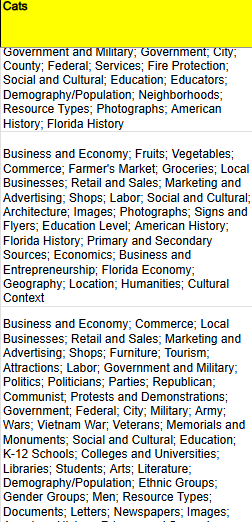
Closer to the end of the week, I began working on Cats, which was initially intimidating since there were pages of terms to choose from and apply them to the artifacts. In reality, that has made it a lot of fun and actually a bit easier compared to even the keywords, since the list is right in front of me. Despite being especially time-consuming due to my unfamiliarity with the content and resource types, spending time reviewing the terms repeatedly has given me even more insight into the specificity that goes into making these artifacts searchable. My involvement with this project not only feels like an accomplishment for what I am working towards, but I also hope that the efforts put into the assignments, such as the spreadsheet, will go far beyond this summer and aid researchers.
As I look back on the progress I have made with metadata thus far, it has been exciting every time I discover even a tiny piece of information. However, I never really thought of jotting down any of the websites, even the most interesting ones that I didn’t specifically reference, due to the limited spacing on the metadata sheets. This has come back to bite me because the Description and External Reference on the spreadsheet go hand in hand, essentially creating a bibliography. For future students working the metadata route, I would offer some advice on keeping some of those sources while processing. I wish I could remember all the ones I had already used for the historical background section; however, on the upside, it has not hurt to revisit these topics and find new articles related to them.

A better example of this was a website I recently came across that contained a verified photo of Charles Beall, which was nice to put a face to the name, along with the year and age at which he enlisted in the army. Unfortunately, someone who has once again proven difficult to find any additional information on is Jack Beall; truly, a mysterious man. As of now, I am unsure if Jack’s brother, Jesse, is in any of the photographs, but I often see him mentioned in articles about his life and his commitment to DeBary history and the preservation of its artifacts. This prompted the mayor at the time of his death to commemorate Jesse’s dedication to keeping it alive; it’s fascinating that a love for history seemed to be a major theme that flowed through the Beall family, probably leading to many great conversations about each other’s findings.
Along with some other artifacts riddled with mystery, I recognize that the Description and Subject will be among the most time-consuming parts because of the time required to research either a more in-depth context for the artifacts or to find the authorized terms according to RICHES. A few topics I anticipate researching involve seeking the origins of the first DeBary post office and the story behind the creation of their volunteer fire department. Although I cannot be totally sure about how much will be done by next week, the hope is to come close to finishing up my half of the DeBary spreadsheet and move on to the next project already lined up for me on the assignment tracker.


Comments